


According to latest data published from New York State Department of Health, U.S, one child dies every 5 days from chocking on food, not just on toys, coins, marbles or any inedible items but simple food in your household.
Table of Contents
Choking is one of the leading causes of accidental injury and death among children under five years old. Young kids have small airways — about the size of a drinking straw — and they are still learning to chew and swallow properly.
Both food and small objects can block their airway, leading to serious injury. The good news is that most choking incidents are preventable with the right safety steps.
Common Choking Hazards for Children
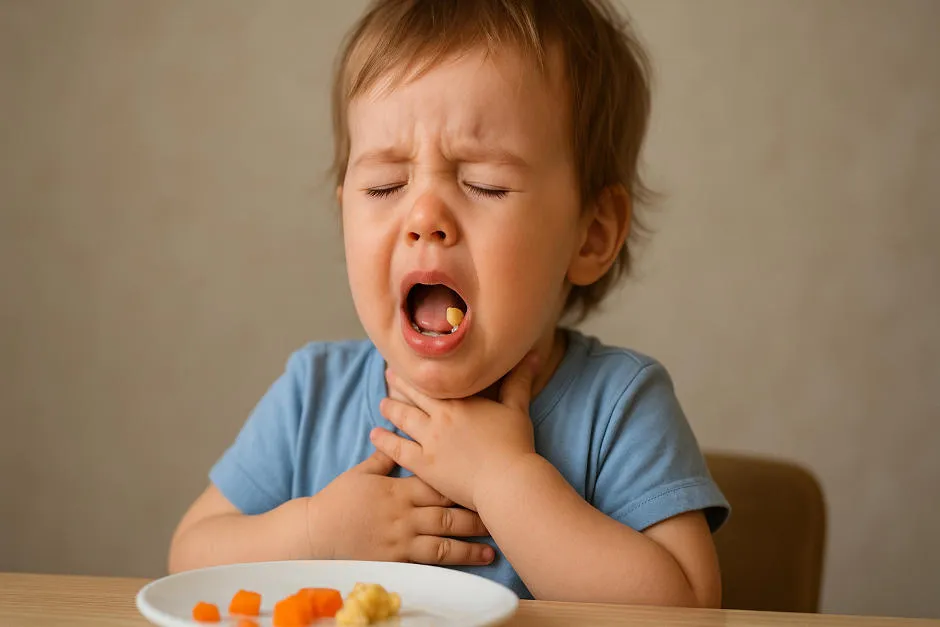
Foods That Often Cause Choking
- Whole grapes or cherry tomatoes
- Hot dogs (especially coin-shaped pieces)
- Raw vegetables like carrot sticks or apple chunks
- Nuts, seeds, popcorn
- Hard or sticky candy, marshmallows, chewing gum
- Large pieces of meat or cheese
- Thick spoonfuls of peanut butter
Non-Food Objects
- Coins, marbles, beads
- Tiny toy parts or broken toys
- Latex balloons and balloon pieces
- Button batteries, pen caps, screws, or small household items
Tip: Always pay attention to the size, shape, and texture of foods and toys.
Mealtime Safety: How to Prepare Food Safely
- Cut food small: About ½ inch (1 cm) or smaller for toddlers.
- Change shapes: Cut grapes and cherry tomatoes lengthwise; slice hot dogs lengthwise and then chop them.
- Soften hard foods: Steam or cook vegetables and fruits until soft.
- Avoid large chunks: Break meat and cheese into small pieces.
- Thin peanut butter: Spread it thinly instead of giving thick spoonfuls.
- Offer water between bites: Help kids swallow safely without mixing liquids and solids.
Toy and Household Safety Tips
- Choose age-appropriate toys based on manufacturer labels.
- Keep small objects (coins, batteries, beads) out of reach.
- Throw away broken toys or pieces that can come loose.
- Never allow balloons around young children — even broken pieces can be deadly.
Supervision & Feeding Behavior
- Always watch your child while they eat. Never leave them alone.
- Make sure they sit upright — no running, lying down, or playing while eating.
- Keep meals calm and unrushed. Encourage small bites and slow chewing.
- If your child has special needs or delayed chewing skills, follow a feeding plan recommended by a doctor or therapist.
What to Do If a Child Is Choking
Important: If a child cannot breathe, call emergency services immediately. Get trained in infant and child CPR and choking rescue techniques.
If the Child Can Cough or Cry
Encourage coughing — it’s the best way to clear the airway. Stay with the child and call for help if the problem continues.
If the Child Cannot Breathe, Talk, or Cry
Perform age-appropriate first aid:
For Infants (Under 1 Year)
- Hold the baby face down on your forearm, supporting the head and neck.
- Give 5 firm back blows between the shoulder blades.
- If the object doesn’t come out, turn the baby face-up and give 5 chest thrusts (using two fingers in the center of the chest).
- Repeat until the object is expelled or the baby becomes unresponsive.
- If unresponsive, start infant CPR and call emergency services.
For Children (Over 1 Year)
- Stand behind the child and perform abdominal thrusts (Heimlich maneuver).
- If the child becomes unresponsive, lay them down and begin child CPR.
- Always call emergency services right away.
Teach Every Caregiver
- Make sure babysitters, grandparents, and teachers of your children should know choking prevention steps.
- Keep emergency numbers visible near the phone or on the fridge.
- Take a first aid or CPR class together — it boosts confidence and safety awareness.
Quick Choking-Safety Checklist
- Cut round foods lengthwise and small
- Cook or soften hard vegetables and fruits
- Keep tiny objects and broken toys away
- Supervise every meal and snack
- Learn infant and child CPR
FAQ
What foods commonly cause choking in young children?
Round, hard, sticky, or large pieces — such as grapes, hot dogs, raw carrots, nuts, popcorn, candy, or thick peanut butter.
How should I cut food to make it safe for my child?
Cut food into small, bite-sized pieces (about ½ inch or smaller). Always cut grapes and tomatoes lengthwise.
What should I do if my child starts choking?
If they can cough or cry — let them try to cough it out. If not breathing, call emergency services and perform age-appropriate first aid (back blows, chest thrusts, or abdominal thrusts).
Why are balloons dangerous?
Latex balloons can block a child’s airway if swallowed or if pieces are inhaled. Always keep balloons away from young children.


