


Table of Contents
Polycystic ovary syndrome (PCOS) is a common endocrine disorder affecting 11% to 13% of women worldwide, with significant effects on fertility and metabolic health. What makes PCOS challenging is that it is not a one-size-fits-all condition—new findings show it has multiple distinct forms, each with unique health outcomes.
A groundbreaking study published in October 2025 in Nature Medicine by researchers from the China Women’s Reproductive Metabolic Network and international collaborators has identified four reproducible PCOS subtypes. This large-scale study analyzed data from nearly 12,000 women across multiple countries, revealing how these subtypes influence reproductive success and long-term metabolic risks differently.
Understanding your PCOS subtype can provide crucial insights for personalized treatments and better health outcomes.
Breaking Down the 4 PCOS Subtypes
Using sophisticated data analysis on nine clinical measurements, the study classified PCOS into four distinct categories:
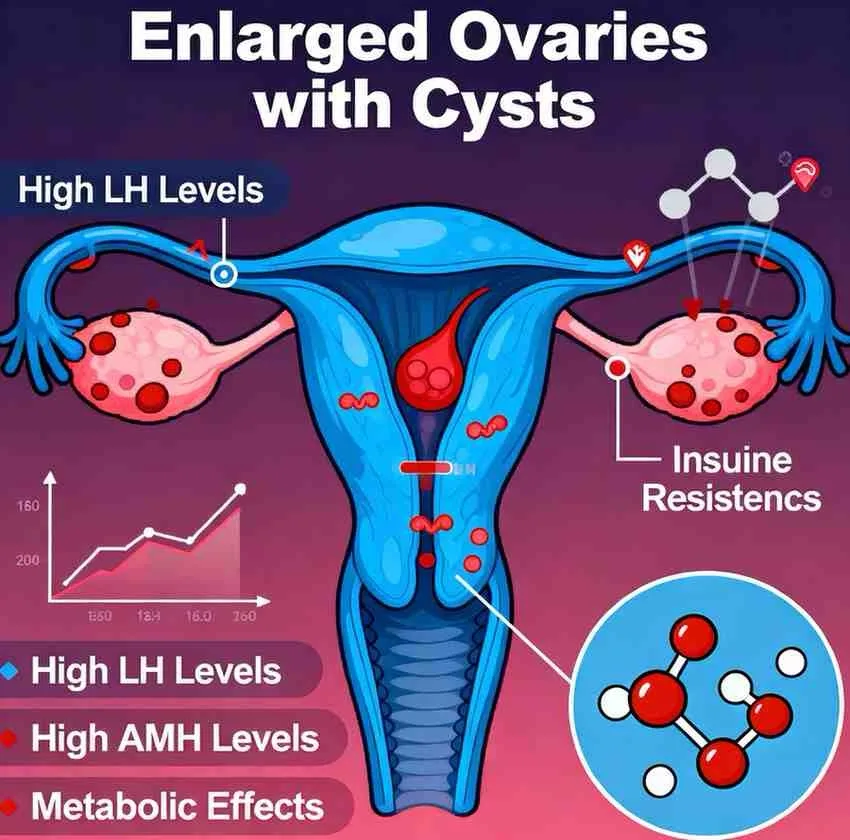
1. PCOS with Hyperandrogenism (High Male Hormones)
Women in this group have elevated androgen levels, which increase their risk for pregnancy complications like second-trimester loss. They also show a higher incidence of dyslipidemia, a disorder impacting cholesterol and fats in the blood.
2. PCOS with Obesity
This type features obesity as a major factor and is linked to the most severe metabolic problems, including insulin resistance and cardiovascular risks. Women with this subtype have the lowest live birth rates during fertility treatments but interestingly show the highest rate of PCOS remission over time.
3. PCOS with High Sex Hormone-Binding Globulin (SHBG)
Higher SHBG levels seem to protect women in this subtype, who experience better reproductive outcomes and have the lowest incidence of diabetes and hypertension compared to others.
4. PCOS with Elevated Luteinizing Hormone (LH) and Anti-Müllerian Hormone (AMH)
This group faces the greatest risks during in vitro fertilization (IVF), including ovarian hyperstimulation syndrome, a dangerous complication, and shows the lowest likelihood of PCOS remission.
Also Read:
Why These Findings Matter
This study advances our understanding of PCOS as a complex, heterogeneous disorder rather than a single condition. It emphasizes that not all PCOS cases are the same, and different types require tailored medical approaches. Recognizing these subtypes can help healthcare providers predict health risks and choose the best treatment plans for each woman.
These findings come from a collaboration of leading reproductive and metabolic health centers, including the State Key Laboratory of Reproductive Medicine and Offspring Health at Shandong University, and were funded by major scientific foundations including the National Natural Science Foundation of China and the U.S. National Institutes of Health.
Taking Charge of Your Health

If you suspect you have PCOS or have been diagnosed, ask your doctor about testing that can determine your specific PCOS subtype. With this knowledge, treatments can be personalized—from managing hormone levels and metabolism to improving fertility outcomes—with a better outlook on long-term health.
Disclaimer: The information provided in this article is for educational and informational purposes only and does not constitute medical advice. While this content is based on the latest scientific research published in Nature Medicine (October 2025) by the China Women’s Reproductive Metabolic Network and collaborating institutions, it is not intended to replace professional medical diagnosis, treatment, or consultation.
If you suspect you have polycystic ovary syndrome (PCOS) or any related health condition, please consult a qualified healthcare provider for personalized advice and care. Individual cases vary, and only a health professional can provide appropriate diagnosis and treatment recommendations based on your specific health needs.


