


Keto vs Mediterranean Diet — if you’re confused about which one is better for weight loss, you’re not alone. Both are popular diets with proven benefits, but they work differently depending on your goals and lifestyle.
Introduction
In the realm of weight loss and health optimisation, two diets frequently emerge: the keto diet and the Mediterranean diet. While both have garnered attention for their potential health benefits, they differ significantly in their approaches and outcomes. This article delves into the fundamentals of each diet, compares their benefits, and provides insights into who might benefit most from each.
Contents Table
Table of Contents
What is the keto diet?
The ketogenic (keto) diet is a high-fat, moderate-protein, and very low-carbohydrate eating plan designed to induce a state of ketosis in the body. In ketosis, the body burns fat for fuel instead of carbohydrates, leading to rapid weight loss.
Core Components:
- High Fat Intake: Approximately 70-80% of daily calories from fats.
- Moderate Protein: About 20-25% of daily calories from protein.
- Low Carbohydrates: Typically 5-10% of daily calories from carbohydrates.
Benefits of the keto diet:
- Rapid Weight Loss: Significant reduction in body weight due to fat burning.
- Improved Blood Sugar Control: May aid in managing type 2 diabetes by stabilising blood sugar levels.
- Enhanced Mental Clarity: Some individuals report improved focus and cognitive function.
Considerations:
- Nutrient Deficiency: Restrictive nature may lead to deficiencies in essential nutrients.
- Sustainability: Long-term adherence can be challenging due to dietary restrictions.
- Potential Health Risks: Prolonged use may lead to issues like liver dysfunction and cardiovascular problems. The Times of India.
What is the Mediterranean diet?
The Mediterranean diet is based on the traditional eating patterns of countries bordering the Mediterranean Sea. It emphasises whole, minimally processed foods and is rich in healthy fats, lean proteins, and plant-based ingredients.
Core Components:
- Healthy Fats: The primary source is extra virgin olive oil.
- Lean Proteins: Includes fish, poultry, legumes, and nuts.
- Plant-Based Foods: High intake of fruits, vegetables, whole grains, and legumes.
- Moderate Dairy: Consumption of cheese and yoghurt in moderation.
- Limited Red Meat: Consumed sparingly.
Benefits of the Mediterranean diet:
- Heart Health: Associated with a reduced risk of cardiovascular diseases Mayo Clinic.
- Weight Management: Supports healthy weight loss and maintenance.
- Cognitive Function: Linked to a lower risk of cognitive decline and Alzheimer’s disease EatingWell.
- Reduced Inflammation: High in antioxidants and anti-inflammatory compounds.
Considerations:
- Slower Weight Loss: Weight loss may be more gradual compared to the keto diet.
- Caloric Intake: Portion control is essential to prevent overeating.
Keto vs Mediterranean Diet: A Comparative Overview
| Feature | Keto Diet | Mediterranean Diet |
|---|---|---|
| Primary Fuel Source | Fats (Ketosis) | Carbohydrates (Whole Grains) |
| Fat Intake | High (70-80%) | Moderate (25-35%) |
| Carbohydrate Intake | Very Low (5-10%) | Moderate (45-60%) |
| Protein Intake | Moderate (20-25%) | Moderate (15-25%) |
| Weight Loss Speed | Rapid | Gradual |
| Heart Health | Mixed results; potential risks with long-term use The Times of India | Strong evidence of benefits Mayo Clinic |
| Sustainability | Challenging long-term adherence | Sustainable and flexible |
| Best For | Individuals seeking rapid weight loss and those with certain neurological conditions Northwestern Medicine | Individuals aiming for long-term health benefits and weight management |
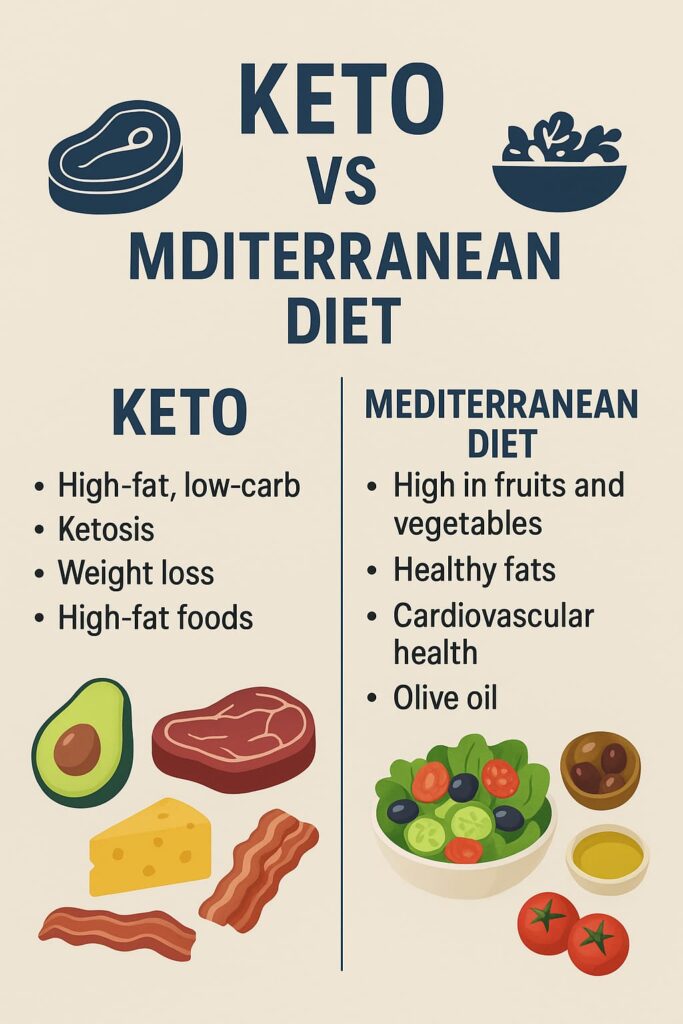
Keto vs Mediterranean Diet: key difference explained (infographics).
Who Should Consider Each Diet?
Keto Diet:
- Ideal For: Individuals seeking rapid weight loss or those with neurological conditions like epilepsy.
- Considerations: Requires careful monitoring of nutrient intake and may not be suitable for individuals with liver or kidney conditions. Medical News Today.
Mediterranean Diet:
- Ideal For: Individuals aiming for sustainable weight management and improved overall health.
- Considerations: Emphasises whole foods and may require adjustments for those with specific dietary restrictions.
Conclusion
Both the keto and Mediterranean diets offer unique benefits tailored to different health goals. The keto diet may be suitable for those seeking rapid weight loss or managing specific medical conditions, while the Mediterranean diet provides a balanced approach to long-term health and wellness. It’s essential to consider individual health needs and preferences and consult with a healthcare professional before embarking on any dietary plan.
FAQs
What is the difference between the keto diet and the Mediterranean diet?
The keto diet is a high-fat, very low-carb diet designed to put your body in ketosis, burning fat for energy. The Mediterranean diet focuses on balanced, whole-food eating with healthy fats, lean proteins, and moderate carbs for long-term health. Keto is typically for rapid weight loss, while Mediterranean supports sustainable weight management.
Which diet is better for rapid weight loss: keto or Mediterranean?
For fast weight loss, the keto diet tends to work better due to its low-carb, high-fat structure that forces your body to burn fat. The Mediterranean diet promotes gradual weight loss while improving heart and overall health.
Can I follow the Mediterranean diet long-term?
Yes! The Mediterranean diet is designed to be sustainable and balanced, making it suitable for long-term adherence. It supports heart health, cognitive function, and healthy weight management.
Who should follow the keto diet?
The keto diet is ideal for individuals seeking rapid weight loss or managing certain medical conditions like epilepsy. However, it may not be suitable for people with kidney, liver, or metabolic issues and should be followed under guidance if used long-term.
Can keto and Mediterranean diets improve overall health?
Yes, both can improve health when followed correctly. Keto helps with fat loss and blood sugar control in the short term, while Mediterranean supports heart health, longevity, and reduced inflammation in the long term.
Can I combine intermittent fasting with these diets?
Absolutely! Combining intermittent fasting with keto or Mediterranean can accelerate fat loss, improve insulin sensitivity, and enhance metabolic health. Make sure to stay hydrated and maintain proper nutrition during eating windows.
Which diet is easier to follow: keto or Mediterranean?
The Mediterranean diet is generally easier to follow because it is flexible, allows a variety of foods, and does not require strict tracking of macronutrients. Keto requires strict carb tracking and can be more challenging to maintain long-term.
Read more about Fasting vs Dieting: Which Is the Best and Most Effective for Weight Loss?
Read more about Is Fasting Good for Health? 10 Proven Science-Backed Benefits
If you want to read more such interesting health-related blogs, go visit this link: https://sciq.in/category/health/


