


Introduction
In October 2025, Asia is witnessing an alarming and early surge in influenza cases. Japan has declared a nationwide flu epidemic, while India and Singapore report rising infections. This outbreak is raising concerns that the traditional flu season may be shifting, becoming less seasonal and more constant. Understanding the driving factors, the regional implications, and what preventive steps to take is critical — especially for India.
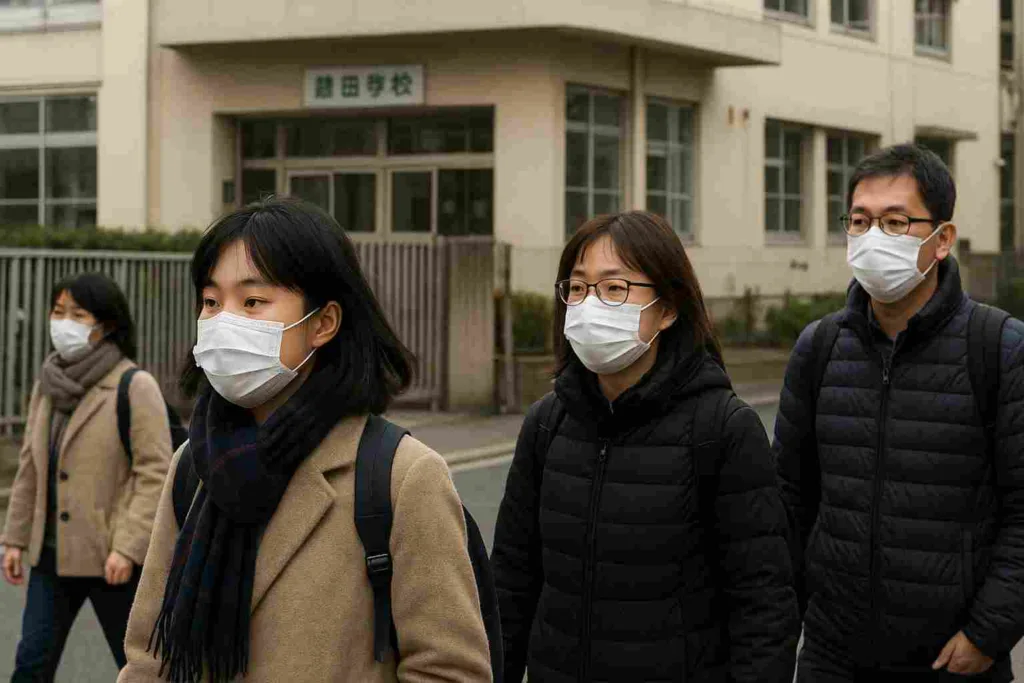
The Ministry of Health in Japan confirmed that the country crossed the epidemic threshold in late September, marking the earliest outbreak in recent years. This wave has come five weeks earlier than expected, suggesting major changes in how influenza spreads in the post-pandemic world.
Japan’s Early Flu Epidemic: Key Facts & Impacts
- Nationwide epidemic declared: On October 3, 2025, Japan’s Ministry of Health officially labeled the situation a national influenza epidemic.
- Case surge ahead of schedule: In the week of Sept 22–28, over 4,000 influenza cases were recorded at designated medical institutions. That number climbed to over 6,000 between Sept 29–Oct 5.
- Epidemic threshold breached: The average number of patients per medical institution reached 1.04 in late September — crossing the epidemic threshold.
- Widespread school closures: Because of the outbreak, 135 schools, childcare centers and kindergartens were temporarily shut across Japan — roughly three times the number during the same period in previous years.
- Regional spread: At least 28 out of 47 prefectures reported increased flu activity. Some of the hardest hit areas include Tokyo, Okinawa, Kagoshima, and Yamagata (where an entire primary school closed after 22 of 36 pupils showed symptoms).
- Healthcare strain: Hospitals in many regions are overcrowded, outpatient wards are full, and staff are under mounting pressure. Some markets and colleges have also shut temporarily to curb spread.
Also Read: 12 Children died due to cough syrup in Rajasthan and MP.
Japan’s outbreak is particularly notable because it has erupted five weeks earlier than the usual flu season onset.
Regional Spread: Singapore, India & Beyond
While Japan’s outbreak is the most dramatic, signs of increased influenza activity are visible across Asia:
- Singapore: The country is experiencing an uptick in acute respiratory infections and influenza-like illnesses. The number of people visiting clinics with flu symptoms has increased by up to 40 % in some instances.
- India (Northern regions): Reports suggest the H3N2 strain is circulating in parts of India’s northern regions. H3N2 has historical significance as a cause of serious flu seasons and pandemics.
- Thailand and other Southeast Asian nations: Some regions are also reporting rising flu activity, possibly linked to monsoon rainfall and changing weather patterns.
These patterns suggest that influenza in 2025 is arriving earlier and with broader geographic reach than typical — possibly pointing to a future where flu seasons blur or overlap.
Why the 2025 Flu Season Is Abnormal
Several factors seem to be converging to produce this unusual flu wave:
Viral Drift & Mismatched Immunity
- The WHO’s 2026 vaccine strain recommendations include different influenza A (H1N1, H3N2) variants than those used in the 2025 Northern-hemisphere vaccines, indicating that drifted strains are circulating.
- When circulating virus strains diverge from vaccine strains (antigenic drift), population immunity weakens, making infections more likely.
Climate, Weather Patterns & Behavioral Shifts
- Extreme weather, unseasonal rainfall, and climate variability may push people indoors more frequently, aiding virus spread.
- In tropical and subtropical zones, influenza already exhibits less rigid seasonality (year-round or multiple peaks). The changing climate may further erode traditional season barriers.
Global Mobility & Post-COVID Effects
- International travel and mobility have rebounded, enabling viruses to spread and seed outbreaks across regions more easily.
- Some influenza lineages may have persisted or evolved differently during the COVID period when restrictions suppressed respiratory virus circulation.
Surveillance & Reporting Resurgence
- Improved surveillance, greater public awareness, and more sensitive testing can amplify detection of outbreaks that might previously have gone unnoticed.
Implications for India: What to Watch & What to Do
Due to India’s vast and varied climate, as well as its population density, the 2025 Asian flu surge carries significant implications:
Strengthen Surveillance & Strain Monitoring
- Expand molecular surveillance to identify which influenza subtypes are circulating in different Indian states.
- Compare strains from India with those in Japan / Singapore to assess importation or drift.
- Monitor for novel or zoonotic influenza strains (e.g. avian influenza spill-overs).
Reevaluate Vaccination Strategy
- Consider whether vaccine timing in India needs adjustment — earlier vaccination in high-risk zones or staggered campaigns.
- Ensure vaccines used locally are as close a match as possible to circulating strains.
- Prioritize vulnerable populations (elderly, children, immunocompromised) for early vaccination.
Public Health Measures & Behavior
- Promote ventilation, masking, and hand hygiene especially during heavy rains or indoor crowding.
- Encourage policies for sick leave in schools/workplaces so symptomatic individuals don’t spread infection.
- Educate the public about recognizing flu symptoms early and seeking medical care.
Healthcare System Readiness
- Hospitals and clinics should brace for off-season surges — stock antivirals, diagnostic kits, and maintain capacity flexibility.
- Preparedness plans should no longer assume flu peaks only in winter.
Research, Modeling & Local Forecasting
- Develop region-specific models (e.g. for Rajasthan, Gujarat, North India) to predict when flu waves are likely.
- Compare past flu-season data with emerging patterns (pre-2025 vs post-2025) to refine forecasting.
Also Read: The Frontiers of Biomedical Science: Innovations and Discoveries.
Conclusion
The 2025 flu outbreak in Asia signals a possible shift in how influenza behaves: earlier surges, weaker seasonality, and more unpredictable waves. Japan’s early epidemic, surging cases in Singapore and India, and evidence of viral drift all suggest that influenza may no longer follow the calendar as reliably as before.
For India, the message is clear: flu season is no longer confined to winter months. Vigilance must be year-round—through surveillance, vaccination, public health measures, and healthcare preparedness.


ib9oyd