


Fasting vs Dieting: Discover which works best for weight loss. Explore top intermittent fasting methods, research insights, and proven tips for sustainable results.
Table of Contents
Table of Contents
Introduction: Fasting vs. Dieting — The Most Common Weight Loss Dilemma
When it comes to losing weight, most people find themselves torn between fasting and dieting. Both methods claim to burn fat, boost metabolism, and improve health — but which one actually works best?
In this blog, we’ll break down the key differences, explore popular fasting methods, and see what science says so you can make the right choice for your body.
What Is the Main Difference Between Fasting and Dieting?
The main difference is in the approach:
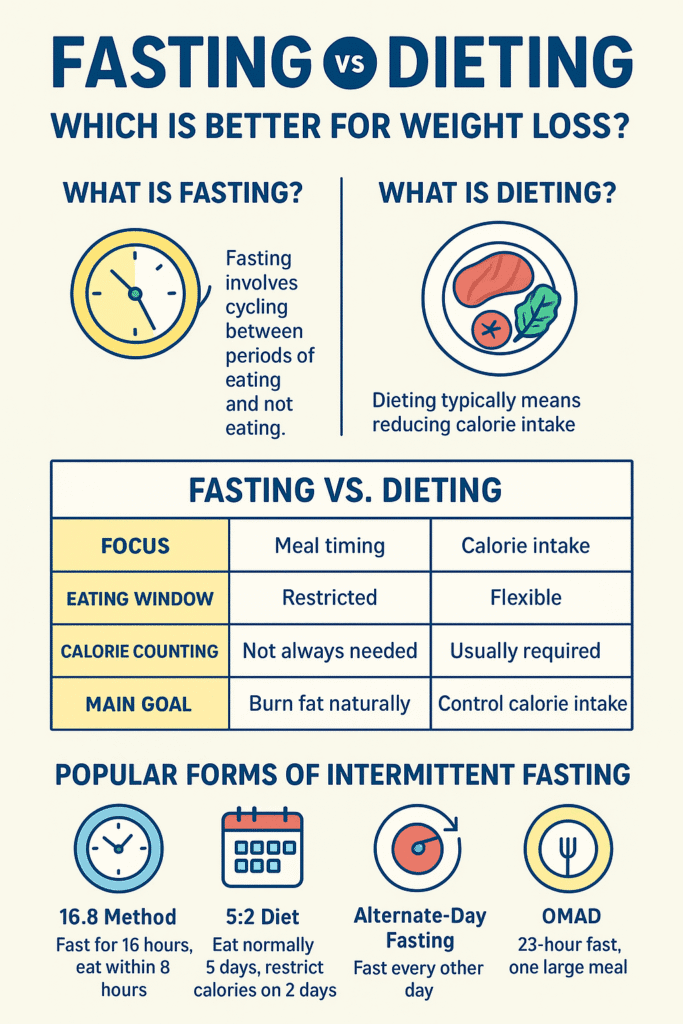
| Feature | Fasting | Dieting |
|---|---|---|
| Focus | When you eat | What and how much you eat |
| Calorie Counting | Not always required | Usually required |
| Eating Window | Restricted (e.g., 8 hours) | Flexible |
| Goal | Trigger fat-burning hormones | Maintain calorie deficit |
👉 In simple terms, fasting controls meal timing, while dieting controls calories.
What Is Intermittent Fasting and How Does It Work?
Intermittent Fasting (IF) is one of the most popular fasting methods today.
It cycles between periods of eating and fasting, allowing your body to:
- Lower insulin levels
- Increase fat-burning hormones (like norepinephrine)
- Boost cell repair through autophagy
- Use stored fat as energy
🧪 Scientific Support:
A 2019 study published in the New England Journal of Medicine found that intermittent fasting improves metabolism, reduces inflammation, and supports weight management.
🔗 Read the study here
What Are the Most Popular Forms of Intermittent Fasting?
Here are the most effective and beginner-friendly fasting schedules:
🧭 1. 16:8 Method
- How it works: Fast for 16 hours, eat within 8 hours
- Example: Eat from 12 PM to 8 PM
- Best for: Beginners and sustainable weight loss
- Benefits: Easy to maintain, reduces snacking
📅 2. 5:2 Diet
- How it works: Eat normally for 5 days, restrict calories (500–600) for 2 days
- Best for: Structured planners
- Benefits: Weekly flexibility
🌙 3. Alternate-Day Fasting
- How it works: Fast every other day
- Best for: Experienced fasters
- Benefits: Rapid weight loss, improved insulin sensitivity
🧘 4. OMAD (One Meal A Day)
- How it works: 23-hour fast, one large meal
- Best for: Advanced users
- Benefits: Strong calorie control, boosts discipline
📊 According to a 2020 review in Annual Review of Nutrition, 16:8 and 5:2 are the most sustainable fasting plans for long-term health.
🔗 View research
What Is Dieting and How Does It Help in Weight Loss?
Dieting is about controlling calorie intake.
The principle:
🔻 Calorie Deficit = Weight Loss
🥗 Popular Types of Dieting for Weight Loss
There are many types of diets people follow to lose weight, each with a unique approach to calorie restriction, food choice, and metabolism. Below are the most popular and scientifically studied diets:
1. Calorie-Deficit Diet
- Concept: The most fundamental approach — consume fewer calories than your body burns.
- How It Works: You track your daily caloric intake and reduce it by 10–20%.
- Best For: Beginners who want flexibility.
- Research: A study published in the National Library of Medicine confirms that consistent calorie deficits lead to sustainable weight loss.
2. Low-Carb Diet (e.g., Atkins, Keto)
- Concept: Reduce carbohydrate intake drastically and increase healthy fats and protein.
- How It Works: Low-carb diets push the body into ketosis, a state where fat becomes the main energy source.
- Popular Variants:
- Keto Diet: Less than 50g carbs/day, high fat (~70%), moderate protein (~20%)
- Atkins Diet: Gradually increases carb intake over phases
- Research: Harvard Health shows keto can result in faster short-term weight loss compared to low-fat diets.
3. Low-Fat Diet
- Concept: Reduce total fat intake (especially saturated fats) and focus on carbs and lean protein.
- How It Works: Fat has 9 calories per gram, so reducing fat can significantly lower total calorie intake.
- Best For: People managing cholesterol or heart conditions.
4. Mediterranean Diet
- Concept: Inspired by traditional Mediterranean eating habits — rich in fruits, vegetables, olive oil, fish, and whole grains.
- Benefits: Promotes heart health, reduces inflammation, and supports sustainable weight loss.
- Research: Mayo Clinic confirms its benefits for long-term health and weight management.
5. Plant-Based or Vegan Diet
- Concept: Eliminates animal products; focuses on whole plant foods.
- How It Works: High in fibre, low in calories, leading to a natural calorie deficit.
- Best For: Ethical eaters or those seeking to lower cholesterol.
6. Paleo Diet
- Concept: “Eat like a caveman” — unprocessed foods, lean meats, fruits, vegetables, and nuts; excludes grains, dairy, and processed foods.
- Focus: Natural, whole foods that reduce inflammation and improve metabolic health.
7. Zone Diet
- Concept: balances macronutrients in a 40% carbs, 30% protein, 30% fat ratio.
- Goal: Maintain stable blood sugar and reduce fat storage.
8. DASH Diet (Dietary Approaches to Stop Hypertension)
- Concept: Designed to reduce blood pressure but also aids in weight loss.
- Focus: Fruits, vegetables, whole grains, lean protein, and low sodium intake
📚 Research from Harvard Health shows that any diet that creates a calorie deficit leads to weight loss, but sustainability is the key.
🔗 Harvard Health reference
⚖️ Fasting vs Dieting: Which Works Better According to Research?
| Criteria | Fasting | Dieting |
|---|---|---|
| Fat Loss | ✅ More efficient (fat-focused) | ✅ Effective but slower |
| Muscle Preservation | ✅ Better in IF | ❌ Risk if protein is low |
| Metabolic Health | ✅ Improves insulin sensitivity | ⚠️ Depends on diet type |
| Ease of Maintenance | ✅ Flexible eating windows | ❌ Can feel restrictive |
| Scientific Backing | Strong for fat loss & longevity | Strong for calorie balance |
📊 Below is a visual summary of how fasting and dieting differ in terms of fat loss, metabolism, and sustainability. Use it to decide which approach fits your lifestyle best.
🧪 Key Study (JAMA Network, 2021):
Found intermittent fasting equals or surpasses traditional calorie restriction for weight loss and improves metabolic markers.
🔗 Read the study
💡 Can You Combine Fasting and Dieting?
Yes!
Combining both gives the best results — use fasting for timing and dieting for nutrition balance.
Example:
- Follow 16:8 fasting
- Eat Mediterranean-style meals within the 8-hour window
- Maintain moderate calorie deficit
This approach supports fat loss, muscle maintenance, and sustainable habits.
🧭 How to Choose Between Fasting and Dieting
Choose fasting if:
✅ You prefer flexible timing
✅ You dislike calorie counting
✅ You want additional health benefits (autophagy, insulin sensitivity)
Choose dieting if:
✅ You like meal structure
✅ You have specific nutrition goals
✅ You want a traditional approach
⚠️ Risks and Precautions
- Avoid extreme fasting (>24 hours) without medical advice
- Consult a doctor if you have diabetes, thyroid, or eating disorders
- Always focus on whole foods, hydration, and balanced nutrition
🧾 Conclusion: Which Is Better for Weight Loss?
Both fasting and dieting are effective, but research shows intermittent fasting offers more metabolic benefits and is easier to maintain.
The best plan is the one you can sustain while nourishing your body.
🧠 Tip: Start with 16:8 fasting + balanced diet = 🔥 sustainable results!
FAQs
Is fasting better than dieting for weight loss?
Fasting and dieting both help with weight loss, but in different ways. Fasting focuses on when you eat, reducing your eating window, which naturally lowers calorie intake and improves insulin sensitivity. Dieting, on the other hand, focuses on what and how much you eat. Research suggests intermittent fasting can be as effective as calorie restriction, especially for fat loss and metabolic health.
Can you combine fasting and dieting together?
Yes! You can combine intermittent fasting with a healthy calorie-controlled diet for the best results. For example, follow a 16:8 fasting schedule while eating balanced meals with whole foods, lean protein, and healthy fats during eating hours.
Which is easier to follow — fasting or dieting?
It depends on your lifestyle. Many people find fasting easier because it removes the need for calorie counting and meal planning. Others prefer dieting for more flexibility in eating times. Try both to see which fits your routine best.
How long does it take to see results from fasting or dieting?
Most people notice visible results in 2–4 weeks with consistency. However, sustainable weight loss usually occurs at 0.5 to 1 kg per week. Combine fasting or dieting with exercise and hydration for faster results.
Is intermittent fasting safe for everyone?
Not always. Pregnant women, people with diabetes, or those with eating disorders should avoid fasting without medical advice. Always consult your doctor or nutritionist before starting a fasting or strict dieting plan.
What are the side effects of fasting or dieting?
Common side effects include fatigue, headaches, irritability, and hunger pangs in the beginning. These often fade as your body adjusts. To minimise side effects, stay hydrated and ensure proper electrolyte balance.
Read more about Is Fasting Good for Health?
Read more about Keto vs Mediterranean Diet: Which One is the Ultimate Choice for Weight Loss?
If you want to read more such interesting health-related blogs, go visit this link: https://sciq.in/category/health/


